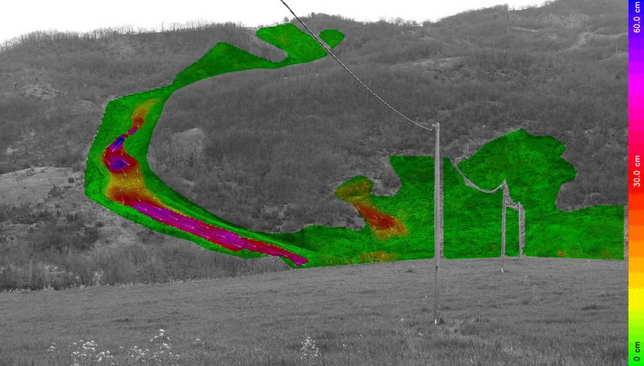
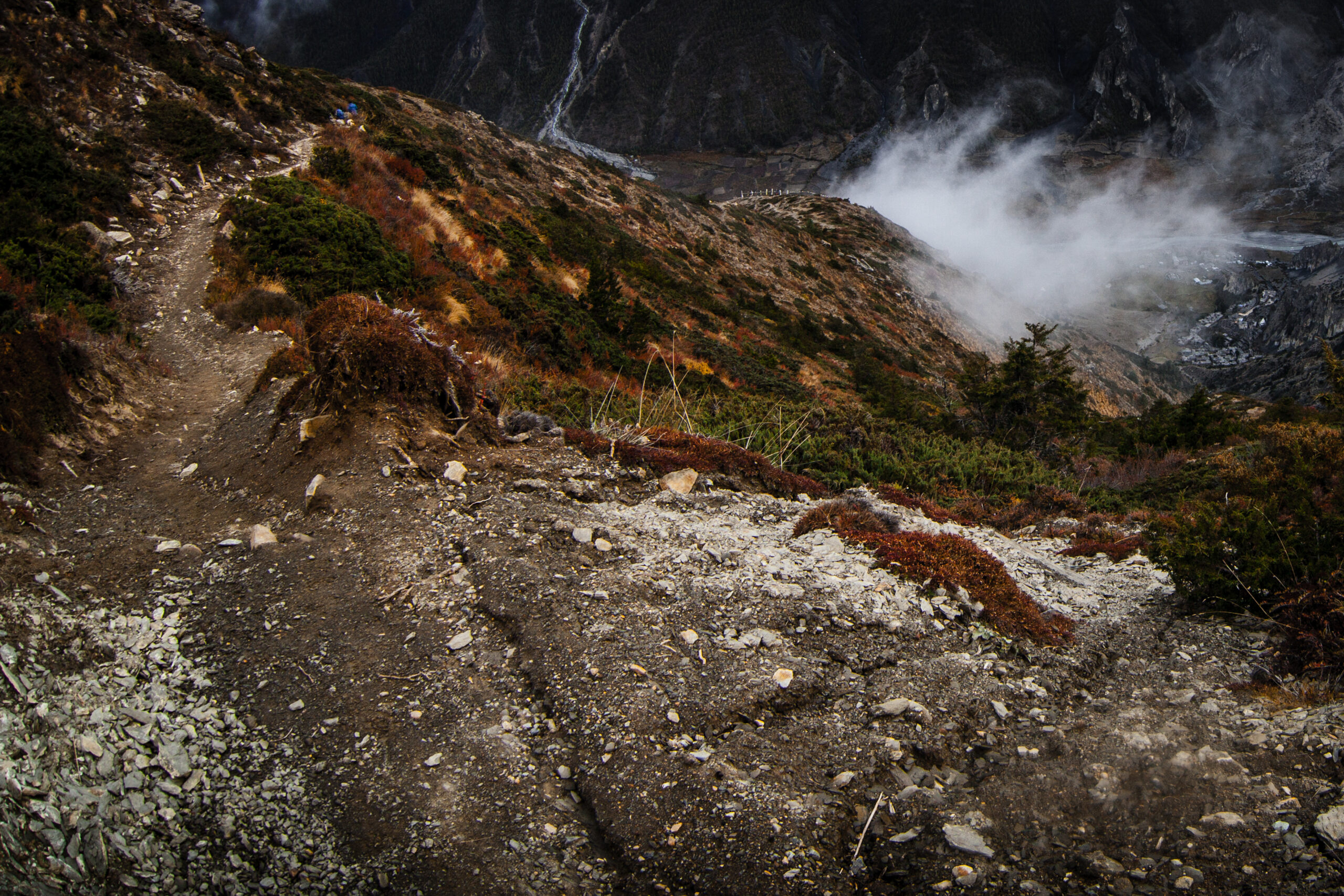
Every year, landslides kill thousands of people and cause billions in infrastructure damage. Yet most of them are predictable — if you understand what sets them off.
Introduction: A Mountain That Moves
On the morning of August 14, 2021, a massive landslide swept through the Pétion-Ville district of Haiti, already devastated by a 7.2-magnitude earthquake the day before. Thousands of homes were buried. Rescue workers couldn’t reach survivors. The death toll climbed for days.
This is what landslides do. They strike fast, they strike hard, and they rarely give warning. But here’s what most people don’t realise: landslides don’t happen randomly. Every single one has a cause — or more often, a combination of causes working together over time until a slope finally gives way.
Understanding what triggers a landslide is the first step toward predicting one, preparing for one, and preventing one. Whether you’re a geologist, an engineer, a municipal planner, or simply someone who lives near a hillside, this guide gives you the full picture.
Before the Triggers: What Makes a Slope Vulnerable?
To understand triggers, you first need to understand what a landslide actually is.
A landslide occurs when the driving forces acting on a mass of soil or rock — primarily gravity — overcome the resisting forces holding it in place — primarily friction and cohesion between particles. Engineers express this as the Factor of Safety (FS):
Factor of Safety = Resisting Forces ÷ Driving Forces
When FS > 1.0, the slope is stable. When FS = 1.0, the slope is at the point of failure. When FS < 1.0, failure occurs.
A slope can sit at an FS of 1.1 or 1.2 for centuries — technically stable, but operating with very little margin. All it takes is the right trigger to push it over the edge.
Some slopes are inherently more vulnerable than others because of:
- Geology — weak, fractured, or highly weathered rock; soft clay layers; or rock types that lose strength rapidly when wet
- Slope angle — steeper slopes are closer to the natural angle of repose for the material
- Previous failure history — slopes that have failed before have weakened internal surfaces that are prone to re-activation
- Vegetation cover — roots bind soil and intercept rainfall; devegetated slopes are significantly more susceptible
- Geological structure — bedding planes, faults, or joints oriented parallel to the slope face create natural slide surfaces
With that foundation established, let’s explore the six main triggers.
Trigger 1: Rainfall and Water Infiltration
The most common landslide trigger on Earth.
Water is the single greatest driver of slope instability worldwide. It acts through several simultaneous mechanisms, all of which reduce the Factor of Safety:
Increased Weight
Soil is significantly heavier when wet. A cubic metre of dry sandy soil might weigh around 1,600 kg. The same soil saturated with water can weigh 2,000 kg or more. More weight on a slope means more downslope driving force.
Reduced Shear Strength Through Pore Water Pressure
This is the critical mechanism. When water infiltrates soil, it builds up pressure in the pore spaces between particles — what engineers call pore water pressure. This pressure acts to push soil particles apart, reducing the frictional contact between them.
The governing equation is Terzaghi’s effective stress principle:
Effective Stress (σ’) = Total Stress (σ) − Pore Water Pressure (u)
As pore water pressure u rises, effective stress σ’ falls — and with it, the shear strength of the soil. A slope that could comfortably support itself under dry conditions may fail completely under sustained rainfall.
The Role of Rainfall Intensity and Duration
Not all rainfall events are equal. Research consistently shows that the combination of high intensity over a short period (triggering shallow, rapid failures) and prolonged moderate rainfall (saturating deeper soil horizons and raising the water table) are both dangerous — for different reasons:
- Intense, short-duration rainfall typically triggers shallow debris flows and earthflows in the upper soil horizon
- Long-duration, moderate rainfall saturates deeper layers and can trigger deep-seated rotational or translational slides
Many countries have developed rainfall threshold curves — empirical relationships between rainfall intensity and duration that indicate when landslide probability becomes significant. These form the backbone of early warning systems in places like Italy, Japan, Brazil, and the United States.
Real-World Example
The 2018 Hiroshima landslides in Japan were triggered by record rainfall — over 200 mm in 48 hours in some areas. Over 200 landslides occurred simultaneously across the region, killing more than 220 people. The event was exceptional in scale but entirely explicable: prolonged heavy rainfall, steep slopes underlain by decomposed granite, and settlements built directly below hazard zones.
Trigger 2: Earthquakes and Ground Shaking
The trigger that turns seconds into catastrophes.
Earthquakes are among the most dramatic and rapid landslide triggers. Unlike rainfall, which takes hours or days to build critical pore pressures, seismic shaking can cause slope failure in seconds — often across vast areas simultaneously.
The Mechanism: Dynamic Loading and Liquefaction
Earthquakes trigger landslides through two primary mechanisms:
1. Dynamic Stress Increase = Ground shaking applies rapidly alternating horizontal and vertical accelerations to a slope. These dynamic loads temporarily increase the driving stresses on the slope, reducing the Factor of Safety — sometimes below 1.0 — for fractions of a second. On already marginal slopes, this is sufficient to initiate failure.
2. Liquefaction of Saturated Soils = In saturated sandy or silty soils, earthquake shaking compresses the soil structure and drives up pore water pressure rapidly , sometimes to the point where the soil effectively loses all shear strength and behaves like a liquid. This is liquefaction, and it is particularly devastating in coastal and riverine areas with loose, water-saturated deposits.
Scale of Seismically Triggered Landslides
The relationship between earthquake magnitude and landslide potential is well established:
- Magnitude < 4.0: Landslides are rare
- Magnitude 5.0–6.0: Landslides possible near epicentre
- Magnitude > 6.5: Widespread landslides across large areas
- Magnitude > 7.5: Catastrophic landslide events possible across entire regions
Real-World Example
The 2008 Wenchuan earthquake in China (magnitude 7.9) triggered an estimated 56,000 landslides across an area of approximately 110,000 km². The Daguangbao landslide alone involved over 700 million cubic metres of rock and completely buried a river valley. The combined death toll from seismically triggered landslides in that event exceeded 20,000 people — more than a third of the total earthquake fatalities.
Trigger 3: Human Activity and Land Use Change
The trigger we manufacture ourselves.
Natural slopes have evolved over thousands of years to reach an equilibrium with their environment. Human activity can destabilise that equilibrium remarkably quickly — and in many parts of the world, anthropogenic factors have become the leading cause of landslide initiation.
Slope Cutting and Excavation
Road construction through mountainous terrain is perhaps the single most prolific human cause of landslides globally. When a slope is cut to create a road bench:
- The natural toe support is removed, increasing the driving moment on material above
- Formerly internal stress concentrations are exposed at the cut face
- Water infiltration pathways are altered, often concentrating drainage against the cut
Studies in Nepal, India, and Central America consistently show landslide rates dramatically higher along road corridors than on undisturbed slopes — sometimes by an order of magnitude.
Loading the Top of a Slope
Adding weight to the crest of a slope — through construction of buildings, placement of fill, or storage of materials — increases the driving force without changing the resisting capacity. This directly reduces the Factor of Safety. It’s a straightforward mechanism that is nonetheless frequently overlooked in informal settlement contexts.
Deforestation and Vegetation Removal
Forests provide slope stability through multiple mechanisms:
- Root systems mechanically reinforce soil, increasing cohesion (often by 2–15 kPa — significant for shallow slides)
- Canopy interception and transpiration reduce the volume of water infiltrating into the slope
- Root channels can act as drainage pathways or, conversely, as preferential infiltration routes
When forest is removed — by logging, fire, or agricultural clearing — all of these benefits are lost simultaneously. Shallow landslide risk typically increases dramatically in the years immediately following clearance, before any revegetation can re-establish root networks.
Changed Drainage Patterns
Urban development seals permeable surfaces, concentrating runoff and directing it to locations it would never naturally reach. Failed or leaking drainage infrastructure — burst water mains, blocked culverts, inadequate stormwater systems — can introduce large volumes of water directly into slopes. These are among the most common anthropogenic landslide triggers in developed urban environments.
Mining and Waste Disposal
Tailings dams — engineered structures used to store mining waste — represent a specific and catastrophic risk category. Failures at Brumadinho, Brazil (2019) and Samarco, Brazil (2015) demonstrated how liquefaction of saturated tailings can release devastating flows. Though technically engineered structures rather than natural slopes, the physics of failure are identical.
Trigger 4: Volcanic Activity
The trigger that creates its own slopes — and then destroys them.
Volcanoes generate landslides in more ways than any other single geological phenomenon. They create steep, unstable terrain, saturate slopes with hydrothermal fluids, shake them with earthquakes, and load them with fresh volcanic deposits — often all at once.
Volcanic Edifice Collapse
Volcanic cones are inherently unstable structures. They are built rapidly from loose pyroclastic material and lava flows, often on weak foundation rocks, and are frequently hydrothermal altered — meaning steam and acidic fluids percolating through the volcanic edifice chemically weaken the rock over time.
The result can be sector collapse: the catastrophic failure of a large portion of the volcanic flank, generating a debris avalanche of extraordinary volume and speed. These events produce some of the largest landslides in the geological record.
Lahars: Volcanic Mudflows
When volcanic deposits — ash falls, pyroclastic flows, or lava — are mixed with water (from ice and snow melt, crater lake releases, or rainfall), they form lahars: volcanic mudflows that can travel hundreds of kilometres from the volcano at speeds exceeding 50 km/h.
Lahars are particularly insidious because they can occur long after an eruption has ended. Thick ash deposits on slopes remain unstable for years, and each significant rainfall event can remobilise material as new lahars.
Real-World Example
The 1980 eruption of Mount St. Helens in Washington State began with the largest terrestrial landslide in recorded history. A magnitude 5.1 earthquake triggered the collapse of the volcano’s north flank, 2.8 cubic kilometres of rock, ice, and soil which depressurised the volcanic system and immediately released the lateral blast that flattened 600 km² of forest. The landslide and subsequent lahars caused destruction far beyond the volcanic blast zone itself.
Trigger 5: Erosion and Undercutting
The trigger that works from the bottom up.
While most people think of landslides as things that fall down, many failures are initiated from the bottom — by erosion that removes the support from below a slope.
River and Stream Undercutting
Rivers naturally erode their banks, particularly on the outside of meanders where flow velocities are highest. When a river cuts laterally into a slope base, it removes the toe support, the passive resistance that was holding the slope material in place. Over time, as the toe is progressively removed, the slope above becomes increasingly unstable until failure occurs.
This process is dramatically accelerated during flood events, when high-velocity flows armed with bedload sediment can undercut steep bluffs very rapidly.
Coastal Cliff Erosion
Wave action at the base of coastal cliffs performs the same function as river bank erosion. The sea removes cliff toe material, increasing the height and steepness of the free face, and repeatedly wets and dries the cliff face — a process known as wetting and drying cycling that progressively degrades the mechanical properties of many rock types.
Coastal landslides are increasing in frequency in many parts of the world, partly due to rising sea levels extending the time during which wave attack reaches cliff bases, and partly due to increased storminess.
Groundwater Seepage Erosion (Piping)
Where groundwater seeps out at a slope face, it can transport fine particles with it — a process called piping or internal erosion. Over time, this removes material from within the slope, creating subsurface voids that eventually cause the overlying material to collapse.
This mechanism is common in loess deposits (fine wind-blown silt), in areas with dispersive clays, and along irrigation canals or drainage channels where seepage gradients are high.
Real-World Example
The ongoing coastal landslide complex at Holderness on the UK’s east coast illustrates long-term erosion undercutting at work. Wave action on soft glacial tills has produced average cliff retreat rates of approximately 2 metres per year — among the highest in Europe — with periodic large landslide events triggered when undercutting removes toe support.
Trigger 6: Freeze-Thaw Cycles and Permafrost Thaw
The trigger that is accelerating with climate change.
In cold climates and at high elevations, water’s ability to change phase between liquid and ice plays a powerful and often underappreciated role in slope instability.
The Freeze-Thaw Mechanism
When water infiltrates cracks and pores in rock or soil and then freezes, it expands by approximately 9% in volume. This expansion exerts enormous pressure on surrounding material — up to 200 MPa under confined conditions. Repeated freeze-thaw cycling progressively widens cracks, disaggregates rock, and weakens the structure of the slope.
The result is:
- Progressive fragmentation of intact rock into progressively smaller pieces
- Widening of pre-existing joints and fractures
- Loosening of the connection between weathered surface material and underlying bedrock
Slopes in alpine environments accumulate this damage over winter and become most susceptible to failure in early spring — when snowmelt provides both water and the final trigger for slopes weakened by months of frost action.
Permafrost: Ice as Structural Support
In high-latitude and high-altitude environments, permanently frozen ground, permafrost, plays a critical structural role. Ice in the soil and rock acts as a cementing agent, binding particles together and providing cohesion that would not exist in the unfrozen state.
When permafrost thaws, this cohesion is lost. Slopes that were stable for millennia under frozen conditions can fail dramatically when warmed. The resulting failures, called thaw slumps or retrogressive thaw slumps, can be self-propagating: as warm moist air enters the exposed face, it accelerates thawing and further retreat.
Climate Change: A Rapidly Worsening Situation
Permafrost thaw is one of the clearest physical signals of anthropogenic climate change. Monitoring data from the Arctic, Himalayas, Alps, and Andes consistently shows:
- Rising permafrost temperatures
- Deepening of the active layer (the zone that thaws seasonally)
- Disappearance of permafrost at lower elevations and latitudes
- Increasing frequency and size of thaw-related slope failures
Mountain environments that built settlements, infrastructure, and tourism industries based on the assumption of stable frozen slopes are now facing an uncertain future. The 2017 Piz Cengalo rock avalanche in Switzerland, which killed eight hikers, has been linked in part to permafrost degradation in the source area.
How Triggers Combine: The Compound Effect
It would be a mistake to think of these six triggers as independent. In reality, the most devastating landslide events almost always involve multiple triggers acting together or in sequence.
Consider a common scenario:
- Deforestation (human activity) strips a hillside of root cohesion
- A prolonged wet season (rainfall) saturates the exposed soil
- A moderate earthquake (seismic activity) applies dynamic loading to a slope already at marginal stability
- Failure occurs — on a slope that would have survived any one of these triggers alone
This compound trigger dynamic is why landslide risk assessment is inherently complex. You cannot simply identify one cause. You must characterise the slope’s current state, identify all active preparatory and triggering factors, and understand how they interact.
Warning Signs That a Slope May Be Near Failure
For engineers and community members alike, there are observable indicators that a slope is approaching instability:
- Tension cracks at the top of a slope, curved or linear cracks in the ground surface parallel to the slope edge indicate that the upper portion is beginning to separate from stable ground behind it
- Bulging at the slope toe the lower portion of the slope begins to push outward as internal stresses redistribute
- Tilting of trees, fences, or utility poles differential movement of slope material causes vertical structures to lean downslope
- Springs or wet areas appearing at new locations on a slope indicating groundwater pressure changes or new seepage pathways
- Cracking in structures particularly diagonal cracking in masonry walls or foundations, which reflects differential movement
- Sounds reports of ground cracking, popping, or rumbling from within a slope are serious indicators
None of these individually confirms imminent failure, but any of them on a slope known to have risk factors warrants immediate professional assessment.
What Can Be Done? A Brief Overview of Prevention and Mitigation
Understanding triggers suggests the countermeasures:
| Trigger | Primary Mitigation Approaches |
|---|---|
| Rainfall | Surface drainage, subsurface drainage (horizontal drains, drain trenches), early warning systems based on rainfall thresholds |
| Earthquakes | Slope reinforcement, avoidance of development in high-risk zones, seismic design standards |
| Human activity | Slope stability assessment before earthworks, controlled slope angles, reforestation, drainage management |
| Volcanic activity | Hazard zonation around volcanoes, lahar warning systems, evacuation planning |
| Erosion and undercutting | Toe protection (rock armour, gabion walls), revetment structures, bank stabilisation |
| Freeze-thaw / permafrost | Long-term monitoring, infrastructure relocation where necessary, climate-adapted design standards |
Conclusion: Triggers Are the Key to Prediction
Landslides are not acts of God. They are the physical consequence of forces overcoming resistance and in nearly every case, the triggers that push a slope past its limit are identifiable, measurable, and often predictable.
The six triggers explored in this guide rainfall, earthquakes, human activity, volcanic processes, erosion, and freeze-thaw cycles account for the vast majority of landslide events worldwide. Understanding them doesn’t just satisfy scientific curiosity. It saves lives.
The challenge for the engineering profession, for municipalities, and for communities living near hillsides is to move from reactive to proactive: to characterise slopes before they fail, to monitor triggers as they develop, and to intervene before the Factor of Safety reaches 1.0.
Every landslide tells the story of forces in balance until they weren’t. Our job is to read that story early enough to change the ending.